Communication as a workplace skill: How to build on it before your first job.
%20for%20Webflow.png)


Communication is already part of your everyday life.
Whether you're asking questions in class, collaborating with classmates, working a part-time job, or volunteering in your community, you're constantly building this skill. The next step is learning how to adapt those same communication habits to professional settings, where clear, confident communication can shape projects, relationships, and career opportunities.
Communication becomes especially important when instructions are unclear, a group project starts to drift, feedback changes the direction of your work, or no one is sure who owns the next step.
In those moments, communication is not about perfection or polish. It is about creating clarity so people can move forward.
That makes communication a workplace skill worth noticing, practicing, and building on early.
What communication looks like in practice.
Communication can feel broad, but in real situations, it often shows up through specific behaviors.
It can look like asking a clear question before starting a task, confirming expectations, sharing progress before someone has to ask, explaining why you made a decision, responding to feedback, flagging a blocker early, or following up after a conversation.
These actions help people understand what is happening, what needs to happen next, and where support or clarification is needed.
That is the real value of communication: it makes work easier to understand, easier to contribute to, and easier to move forward.
In class: Make your thinking visible.
In class, communication often starts with showing how you think.
That might mean asking a question when part of an assignment is unclear, explaining your answer during a discussion, or presenting an idea in a way others can follow.
It can also happen in quieter ways. You might summarize a task in your own words before starting. You might ask what a strong final submission should include. You might help a group agree on who is responsible for each part of a project.
Before your next assignment, group project, or presentation, ask yourself:
- What is the goal?
- What is unclear?
- Who needs to know what?
- What should I confirm before moving forward?
Try saying:
“Here is how I’m understanding the assignment. Can you let me know if I’m missing anything?”
Questions like this show that you are paying attention before you begin.
In a project: Communicate before someone has to ask.
Project work is where communication starts to feel more like the workplace.
When you are working with a team, employer partner, client, or community organization, communication becomes part of how the work gets done. You may need to clarify the scope, confirm deadlines, share updates, request feedback, or adjust as new information comes in.
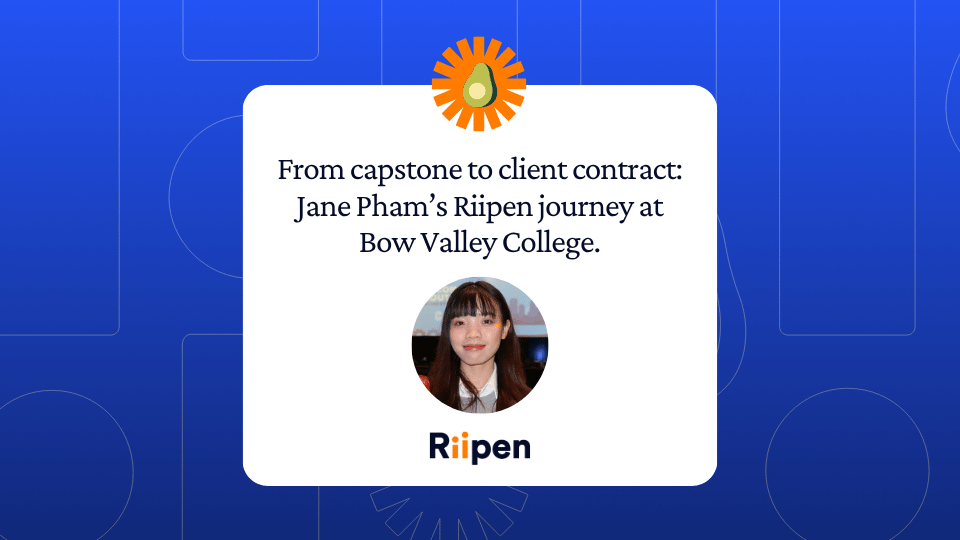
This is why real project experience can be so useful. It gives students a place to practice communication with real goals, real collaborators, real expectations, and real feedback, as students like Jane Pham at Bow Valley College have experienced when classroom projects become real client work.
In one example from Riipen’s 2025 Annual Impact Report, Arizona State University’s Student Project Portal helped students build communication through paid, skill-aligned projects. In that program, 73% of participating students reported measurable improvements in their communication skills.
The takeaway is not that one project makes someone a perfect communicator. It is that communication gets stronger when students have structured opportunities to practice it in context.
During your next project, build communication into the work's rhythm. After a meeting, send a short update. Before a deadline, confirm who is doing what. Before creating the final deliverable, ask what success should look like. When something is unclear, raise it early instead of waiting.
A simple update can sound like:
“Here is what we completed, what we are working on next, and where we could use feedback.”
These moments help keep everyone aligned. They also give you examples you can use later when talking about your skills.
At work: Help people stay aligned.
At work, communication is often about helping other people stay aligned.
That might mean giving your manager a quick update before they ask, letting a teammate know when a deadline is at risk, or asking whether someone wants a summary, a full document, or a meeting to discuss an idea.
Good workplace communication is not always long or polished. Often, it is timely, clear, and useful.
Try saying:
“I wanted to flag this early. We may need more information before we can complete this section. Should we make an assumption and note it, or adjust the scope?”
This shows that you are thinking not only about what you need to say, but also about what the other person needs to move forward.
Five communication habits to practice this week.
You do not need a formal workplace setting to build communication. Start with small habits you can use anywhere.
1. Ask one clearer question.
Instead of saying, “I’m confused,” try asking, “Can you clarify what success would look like for this?” or “Which part should I prioritize first?”
2. Summarize what you heard.
After a conversation, say, “Here is what I’m taking away…” This helps you check your understanding before moving forward.
3. Send a simple update.
In a class project, volunteer task, part-time job, or team activity, share what you finished, what you are working on next, and where you need input.
4. Flag blockers early.
If something is getting in the way, communicate it before the deadline gets too close. Raising a blocker early shows responsibility and gives people time to help solve the problem.
5. Close the loop.
After receiving feedback, let the person know what changed as a result of their input. For example: “Thanks for the feedback. I updated the introduction to make the main point clearer.”
How to talk about communication once you have practiced it.
Communication is easier when you can connect it to something you have actually done.
Instead of saying:
“I have strong communication skills.”
Try giving a specific example:
“In a recent group project, I helped keep the team aligned by summarizing notes, confirming next steps, and sharing weekly updates.”
Or:
“During an employer project, I practiced asking clarifying questions, incorporating feedback, and presenting recommendations based on the project partner’s goals.”
This is stronger because it gives evidence. It shows not only that you value communication, but that you have practiced it in a real situation.
As you prepare for a resume, portfolio, or interview, think about a time when you helped create clarity. Did you ask a question that changed the direction of the work? Did you summarize the next steps? Did you help your team respond to feedback? Did you explain an idea to someone unfamiliar with the topic?
Those moments are worth remembering because they show how you work with other people, not just what you know.
Build on the skill before you need to prove it.
Communication is not something you either have or do not have.
It is a workplace skill you can build through everyday behaviors: asking better questions, confirming expectations, sharing updates, responding to feedback, and helping people stay aligned.
The more you practice, the more evidence you build.
That evidence can help you show future instructors, employers, teammates, and interviewers how you move ideas, projects, and people forward.
For educators designing work-based learning experiences, Shannon Cox, Marketing faculty member and program coordinator at Douglas College, shows how clear communication expectations and structured checkpoints can help students, instructors, and partners stay aligned throughout a project.
Explore how Riipen helps connect learning to real project experience.
Learn more about Riipen for students, educators, and employers.

About the author:
Jennifer Lussier is a Content Marketing Specialist at Riipen with a multidisciplinary background. Wishing to accomplish more for the benefit of society, she joined Riipen in 2019, and is committed to ensuring that postsecondary students gain relevant industry experience through their studies in order to be better prepared for the future of work.


You may also like